

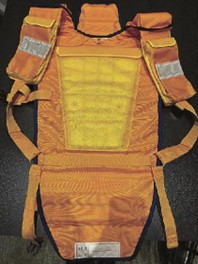
The steadily intensifying seasonal heat now presents life-threatening risks to engineers and skilled laborers working outdoors in the construction industry. Amid these conditions, heatstroke mitigation has become the cornerstone of safety management at midsummer project sites, prompting construction companies and equipment manufacturers to aggressively reinforce their protective measures.A prominent trend is the restructuring of traditional working styles and site operations, highlighted by the expanding adoption of temporary three-day weekend systems during the summer months. Concurrently, rapid progress is being made in the engineering of specialized products designed to lower perceived body temperatures during operations. The industry is mobilizing its full collective wisdom and technological capabilities to shield frontline personnel from extreme thermal environments.According to the Japan Meteorological Agency, average temperatures during the June–August period of 2025 broke historical records at 132 out of 153 meteorological observatories nationwide. The country also logged nine "extreme heat days," defined as days when the maximum temperature exceeds 40°C. Furthermore, according to the three-month weather outlook for May through July released by the agency on April 21, average temperatures are projected to remain above historical baselines.A central pillar of this operational overhaul is the implementation of a three-day weekend. Last summer, Toenec Corporation piloted this system for its skilled laborers and technical staff within its overhead power distribution division. Meanwhile, Konoike Construction Co., Ltd. has formulated a "Comprehensive Extreme Heat Mitigation Roadmap"—a first for the industry—under which it will introduce consecutive leave and three-day weekend schedules starting this summer. These initiatives explicitly aim to eliminate prolonged consecutive work shifts and ensure that workers can effectively dissipate accumulated internal body heat.The road paving sector faces particularly punishing conditions due to the handling of high-temperature asphalt mixtures. Consequently, heatstroke mitigation emerged as a primary focus of discussion during a series of opinion-exchange meetings held from last autumn through this spring between the Japan Road Contractors Association, and Regional Development Bureaus of the Ministry of Land, Infrastructure, Transport and Tourism.An executive from a road paving enterprise, pointing out the unique constraints of paving—such as the inability to execute work during rainfall—commented:"Managing the physical well-being of frontline workers is our absolute priority. While it requires the upward adjustment of labor productivity estimates and the flexible setting of construction periods as prerequisites, we intend to explore various possibilities, including the bold securing of holidays and rest intervals."In tandem with operational adjustments, manufacturers are continuously introducing specialized heatstroke mitigation products tailored for field use. Hazama Ando Corporation has developed a cooling protector that utilizes materials designed to absorb and release heat at specific temperatures. AKTIO Corporation has launched a rental service for an "ice slurry refrigerator" capable of converting commercially available bottled beverages into a frozen, slush-like state. The technology leverages the biological efficiency of ice slurry, which cools the core body temperature faster than standard liquids. Hazama Ando’s Cooling Protector AKTIO’s Ice Slurry Refrigerator