


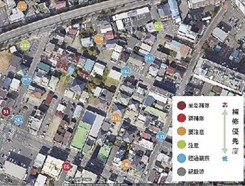
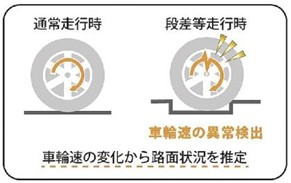
Maeda Road Construction Co., Ltd. has developed an system that detects road potholes by analyzing data collected from connected vehicles. The system evaluates detected pavement anomalies on a five-tier scale based on response priority and displays them as color-coded tags on a digital map. By leveraging data gathered from ordinary passenger vehicles, the system comprehensively covers secondary and residential roads, offering a scalable solution for municipalities grappling with labor shortages and operational challenges in infrastructure management.The pothole detection system, branded "Michi-Tag," estimates road surface conditions by monitoring real-time variations in wheel speed caused by structural steps and uneven pavement. The system visualizes detected anomalies on a map with an accuracy rate of approximately 80%. Pavement damage is categorized into five distinct severity levels, ranging from "Urgent Repair" (highest priority) to "Routine Observation" (lowest priority), thereby providing data to support efficient and strategic road maintenance scheduling.A key structural advantage of the system is its capacity to encompass minor residential roads by utilizing data continuously transmitted from connected cars during everyday operation. Because these connected vehicles are ordinary passenger cars, their high volume ensures comprehensive data acquisition across extensive road networks, including narrow community streets. "As a company deeply committed to local communities, we intentionally focused our efforts on functionalities that safeguard residential roads," a company official at Maeda Road’s Technology Research Institute.The digital tags also serve as an interactive ledger where users can log field notes and maintenance histories. Because pavement deterioration typically accelerates over a span of about three months, comparing map datasets at three-month intervals enables operators to predict areas prone to upcoming pothole formations. This predictive capability transforms road maintenance from a traditionally reactive process into an efficient, preemptive workflow. During trial deployments conducted with Japanese local governments, repair requests and complaints from citizens decreased by 56%. Furthermore, while high-precision detection increased the total volume of identified repair points, it simultaneously boosted overall repair efficiency by 4.5-fold.Municipal roads account for approximately 80% of Japan's total road network. Although potholes demand early detection and rapid remediation to ensure public safety, the municipal authorities responsible for their upkeep frequently face severe shortages of budget and specialized personnel. Consequently, addressing road damage only after receiving public complaints has long remained a critical systemic challenge—one that this new digital platform aims to solve. (2026/06/29)